
By Jennifer Champagne
Managing Editor
Website photos – 2
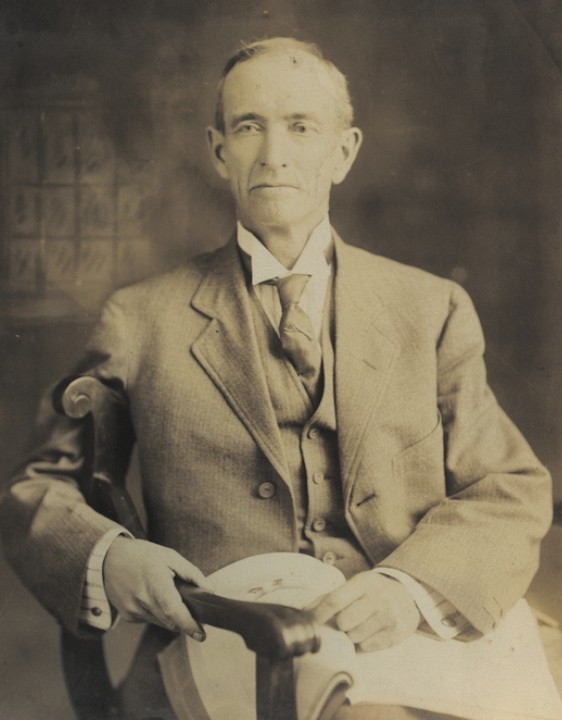
Webster Marble, a pioneering inventor and outdoorsman, left an indelible mark on Michigan’s Upper Peninsula through his innovations and dedication to quality craftsmanship.
Born in 1854 in Milwaukee, Marble later moved with his family to Vassar and then to Frankfort, a small town on the shores of Lake Michigan.
Marble’s journey from those humble beginnings to becoming a prolific patent holder and influential figure in the outdoor industry reflected both ingenuity and entrepreneurial spirit.
Marble’s early life was shaped by his father, Lansing Marble, who was also an inventor. He instilled in Webster a love for the outdoors and a keen sense of curiosity. That influence would guide Marble throughout his life and career.
After spending his formative years exploring the wilderness and learning survival skills, Marble ventured into various trades, honing his abilities as a machinist and blacksmith. Those early experiences laid the groundwork for his future as an inventor.
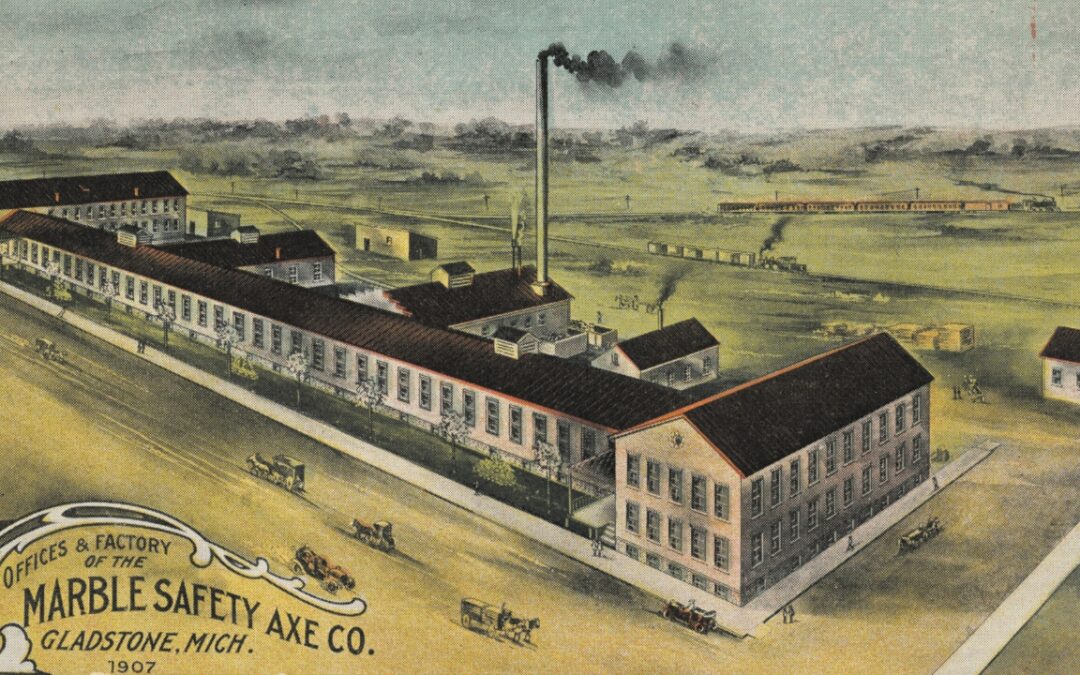
Marble’s entrepreneurial journey began in 1898 with the founding of Gladstone Manufacturing Co. in the U.P. community that would become the heart of his business empire. The company primarily produced gun sights.
His breakthrough came with the Marble Safety Axe Co., where his Safety Pocket Axe — featuring a retractable blade shield — became a blockbuster product. Success at the New York Sportsmen’s Show confirmed the product’s popularity, prompting a name change that closely associated the company with the Safety Axe and Marble himself.
With an expanding range of successful outdoor products, including the Ideal Knife, Waterproof Match Safe and Game Getter Gun, Marble rebranded the company one final time as Marble Arms and Manufacturing Co. to reflect its broadening scope.
The company’s location in Gladstone was strategic, providing access to abundant natural resources and a community that valued outdoor activities such as hunting and fishing.
Marble’s innovative spirit produced a range of outdoor tools and equipment that revolutionized the industry. The products were designed with outdoorsmen in mind, emphasizing safety, durability and practicality.
Marble’s understanding of the needs of outdoor enthusiasts set his products apart from competitors. His ability to anticipate and meet the demands of adventurers cemented his reputation as a pioneering inventor and businessman.
Marble was a prolific inventor, holding more than 60 patents throughout his career. His commitment to quality was unwavering, and he insisted on rigorous testing and meticulous craftsmanship for every product that bore his name. That dedication to excellence earned Marble Arms a reputation for reliability and innovation.
One of Marble’s most significant contributions to the business world was his progressive approach to labor relations. At a time when he employed 400 to 500 workers, he welcomed unionization and implemented profit-sharing programs long before those practices became widespread.
Marble believed happy and motivated employees were essential to maintaining the high standards of his products. That forward-thinking approach fostered a loyal and skilled workforce, further enhancing the Marble Arms reputation for quality.
Marble’s marketing strategies were groundbreaking for his time. He was among the first to use celebrity endorsements, recognizing the power of influential figures in promoting his products.
Notable endorsements came from famous explorers, hunters, military figures and even American aviator Charles Lindbergh, lending credibility and allure to the Marble brand.
Marble personally wrote all the descriptions for his catalogs, infusing them with his passion for the outdoors and his products.
An astute marketer, Marble employed innovative techniques to track the effectiveness of his advertising campaigns. He used different addresses in magazine advertisements to identify which publications generated the most interest and sales. That data-driven approach allowed him to refine his marketing strategies and maximize their impact.
Marble’s understanding of consumer psychology was ahead of its time. He recognized people often desired his products not only for their utility, but also for their aesthetic appeal and the sense of adventure they embodied.
That insight guided his product design and marketing efforts, ensuring Marble Arms products were both functional and desirable.
Marble’s legacy extends beyond his inventions and business acumen.
His influence is preserved and celebrated at the Webster Marble: Inventing the Outdoors Museum in Escanaba. The museum, located inside the Visit Escanaba building, showcases Marble’s life, inventions and impact on the outdoor industry.
The exhibit was initially showcased at the Michigan Historical Museum in Lansing. It began when Dennis Pace, a private collector of Marble’s work, brought his collection to share with Sandra Clark, the museum’s director.
Clark, who had not previously heard of Marble, was inspired by Pace’s extensive collection and the compelling story behind it.
“Just as I was formulating the thought of asking him to loan these items to the museum for an exhibit, he asked if we would like to have them for our collections,” Clark said.
That serendipitous moment led to the creation of an exhibit that not only highlighted Marble’s contributions, but also aligned with the museum’s mission to tell personal and impactful stories from Michigan’s history.
The exhibit’s journey to Escanaba was a collaborative effort fueled by community pride.
Pace played a crucial role in inspiring the exhibit, but it was Vickie Micheau, executive director of the Delta County Chamber of Commerce, whose dedication helped bring the exhibit to fruition in Escanaba.
Her advocacy to return Marble’s work to its roots was instrumental in securing the exhibit’s permanent home.
The Michigan History Center, recognizing the exhibit’s significance, collaborated to make it a lasting feature in Delta County.
“Webster Marble’s story is a cornerstone of our local heritage,” Micheau said. “Bringing this exhibit to Escanaba ensures future generations understand the profound impact he had on the outdoor industry and our community.”
The establishment of the museum was not without challenges.
Micheau’s ability to mobilize community support was crucial in overcoming obstacles and securing the exhibit’s permanent home. Her efforts, alongside those of Ann Jousma Miller, curator of the U.P. Military Museum, and Pace’s contributions, exemplified the community’s commitment to honoring Marble’s legacy.
“We were determined to bring Webster Marble home to Delta County,” Micheau said. “The community’s response and support have been overwhelming, and it’s a reflection of the pride we have in our local history.”
Building the museum involved significant financial contributions from multiple sources.
The John and Melissa Besse Foundation donated $1 million to construct the new Commerce Center, providing a substantial foundation for the project.
The community also engaged in successful crowdfunding efforts through Michigan’s Patronicity program, raising $50,000 that was matched by the state with an additional $50,000.
The U.P. State Fair Authority supported the project with a loan of more than $400,000. The Daniel J. Kobasic Foundation contributed more than $200,000, helping ensure the project’s completion.
The Michigan Economic Development Corp. also contributed a $500,000 grant through the efforts of former state Rep. Beau LaFave.
In total, the efforts generated approximately $2.2 million for the project.
The Webster Marble Museum has become a significant attraction, drawing visitors from across the country.
Dennis Pace, a private collector of Marble’s work, said the exhibit is now playing a role in a growing tourism effort tied to Great Lakes cruise travel.
“This summer in Escanaba, there are 40 different cruise ships stopping for a day to have their passengers experience Escanaba and some of the U.P.,” he said. “One of the things that happens is that the advance team will come and say, ‘Show us your stuff.’”
Pace said Vickie Micheau, executive director of the Delta County Chamber of Commerce, told him the exhibit highlighting Marble and Upper Peninsula outdoor history has become one of the major reasons cruise ships are stopping in Escanaba.
“To understand that a history exhibit like that can bring that kind of visitors in is relatively extraordinary,” Pace said.
According to Pace, many cruise passengers are affluent travelers interested in learning about the culture and history of the communities they visit.
“I think it’s part of something bigger,” Pace said. “That exhibit has been part of something bigger in Delta County as well. That is creating a history and a sense of place for a community.”
Pace said preserving and promoting local history can also help younger generations remain connected to the Upper Peninsula.
“We don’t want to see our high school and college grads flee,” Pace said. “We want to see them stay, and this is one of the things that can help.”
The museum continues to draw tour buses, school groups, scouting organizations and tourists exploring the Upper Peninsula’s history and natural beauty.
When Webster Marble died in 1930, his company faced a series of challenges that threatened its survival.
The onset of the Great Depression drastically reduced consumer spending. During World War II, the government selected Marble’s Ideal Knife design for military use, but Marble Arms could not produce the required quantities alone. Other companies, including Utica, Case and Pal, were enlisted to help.
At the same time, Marble’s patents expired, allowing competitors to manufacture similar products.
After the war, army surplus goods flooded the market at extremely low prices, while imports from Europe and Japan created additional competition.
Despite attempts to diversify into boats, electric generators and other ventures, the company struggled and was bought and sold several times.
Nevertheless, Marble Arms still exists and continues producing outdoor products.
The original Marble Arms building still stands in Gladstone, symbolizing Marble’s lasting influence.
The business has changed hands over the years, but it remains tied to Marble’s legacy.
Pace shared the story of how current owner Craig Lauerman acquired the company.
According to Pace, Lauerman and his father, both certified public accountants, were originally asked to review the company’s finances for a prospective buyer.
Although the business appeared stable and profitable, the buyer backed out. Lauerman and his father ultimately decided to purchase the company themselves.
“Marble Arms makes premium quality, old-school iron sights,” Pace said. “If you buy a Winchester, Remington, SIG Sauer or any sort of long gun or handgun and want the best iron sights in the world, you ask for Marble sights.”
Pace said the company now operates on a smaller scale with several dozen employees, but continues to survive and grow.
“Acquiring Marble Arms was about more than just preserving a business,” Pace said. “It was about safeguarding a piece of our history and continuing Webster Marble’s tradition of innovation and quality.”
The Webster Marble: Inventing the Outdoors Museum is open Monday through Friday from 8 a.m. to 4 p.m. Admission is free, though donations are welcome.
Pace said the exhibit is housed within the Visit Escanaba building, which also contains offices for the Chamber of Commerce and other community organizations. Because of that arrangement, museum hours are currently tied to office hours.
“We are working to raise some additional funds so that they could have that building open on the weekends,” Pace said.
The museum is also open during major events, including the U.P. State Fair.
For those unable to visit in person, videos of the exhibit are available through Visit Escanaba at visitescanaba.com.