Courtesy of Amy Pihlainen-Gabler
Robotics and fish habitat
By Samantha Meyer
Beacon Correspondent
Au Train-Onota middle school teacher Amy Pihlainen-Gabler will give a presentation in April at the National Science Teaching Association Conference in Anaheim, California.
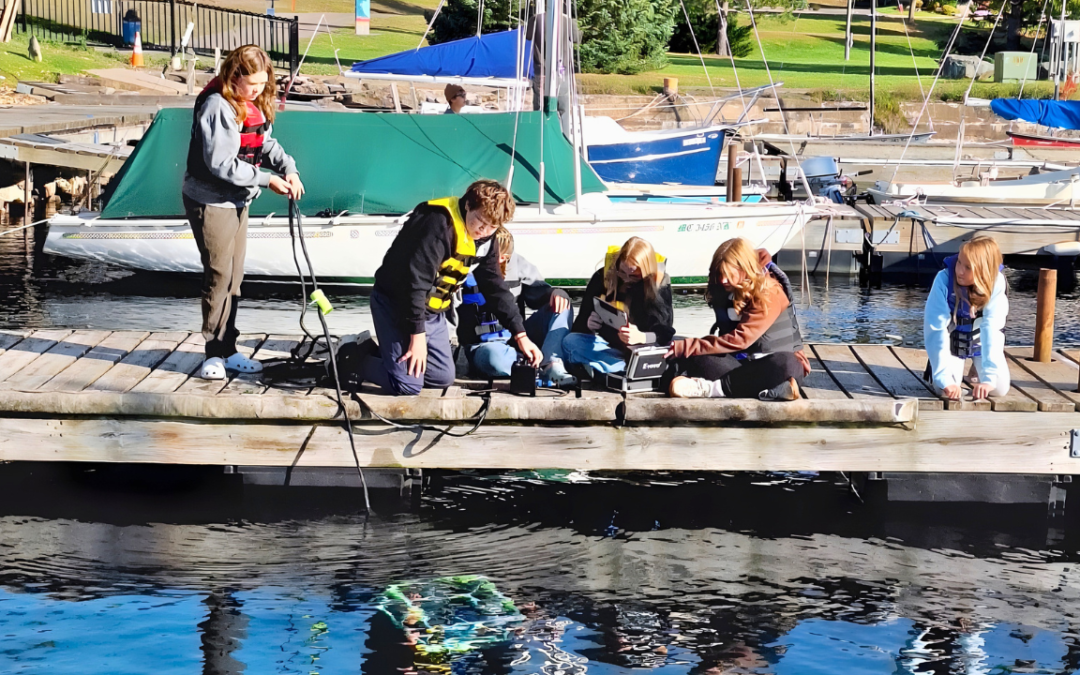
Her session, titled “Fish Habitats and Underwater Remote Operated Vehicles,” will spotlight the hand-ons robotics program at the school and the real-world conservation impact her students have made in their own community.
Pihlainen-Gabler submitted her proposal in the fall and learned in December that it was selected for the national conference. While she co-presented at the conference in 2013, this will be the first time she presents independently at the event.
In March, Pihlainen-Gabler will speak on the topic at the Michigan Science Teachers Association conference, highlighting her students’ work.
Her presentation is rooted in the underwater robotics program she began after attending the Square One training at Lake Superior State University in 2022. Pihlainen-Gabler secured funding through Michigan’s 99H Robotics grant to cover the start-up materials including battery packs, underwater cameras and other essential materials.
Pihlainen-Gabler led the program as the coach with her father, Terry Pihlainen, an electrician, as assistant coach. Pihlainen worked with the students, teaching them how to properly wire their robot.
From the beginning of the program, Pihlainen-Gabler emphasized independence and responsibility among the students on the team.
“The kids need to own their project,” she said. “They need to be doing the project themselves.”
The program soon became a part of a larger conservation effort in Alger County. Pihlainen-Gabler reached out to the Alger Conservation District, and, with the Michigan Department of Natural Resources, they worked on a fish habitat restoration project at Au Train Lake. The underwater robots were used to record footage before and after stick bundles were placed beneath the ice to create new fish habitats. The video footage was later submitted to the DNR to help demonstrate the effectiveness of the conservation effort.
The impact of the program has extended beyond the Upper Peninsula. Pihlainen-Gabler spoke with the Woods Hole Oceanographic Institution, or WHOI, in Massachusetts to connect her students with scientists who work in the field of underwater robotics. A team from WHOI used a remote camera system in the 1980s when they discovered the wreck of the Titanic.
Her students later participated in a virtual session with WHOI researchers, including a scientist who was part of the Titanic expedition. During the conversation, the students discussed their conservation work and took a virtual tour of WHOI’s research building.
Those moments reinforce the purpose behind the program.
“Anything I can do to help them love learning and to really care about the world around them, I’m game,” Philainen-Gabler said.
As Pihlainen-Gabler prepares to take the stage in Anaheim, she looks forward to sharing her students’ work with educators from across the country. Presenting at the National Conference on Science marks a professional milestone and an opportunity to showcase the impact of a small rural classroom on a national platform.
“I’m super excited about it … a little nervous, but in the best way,” she said.