
Courtesy of the Marquette Maritime Museum
Lightkeeper’s descendents to visit Stannard Rock
By Joshua Grove
Beacon Correspondent
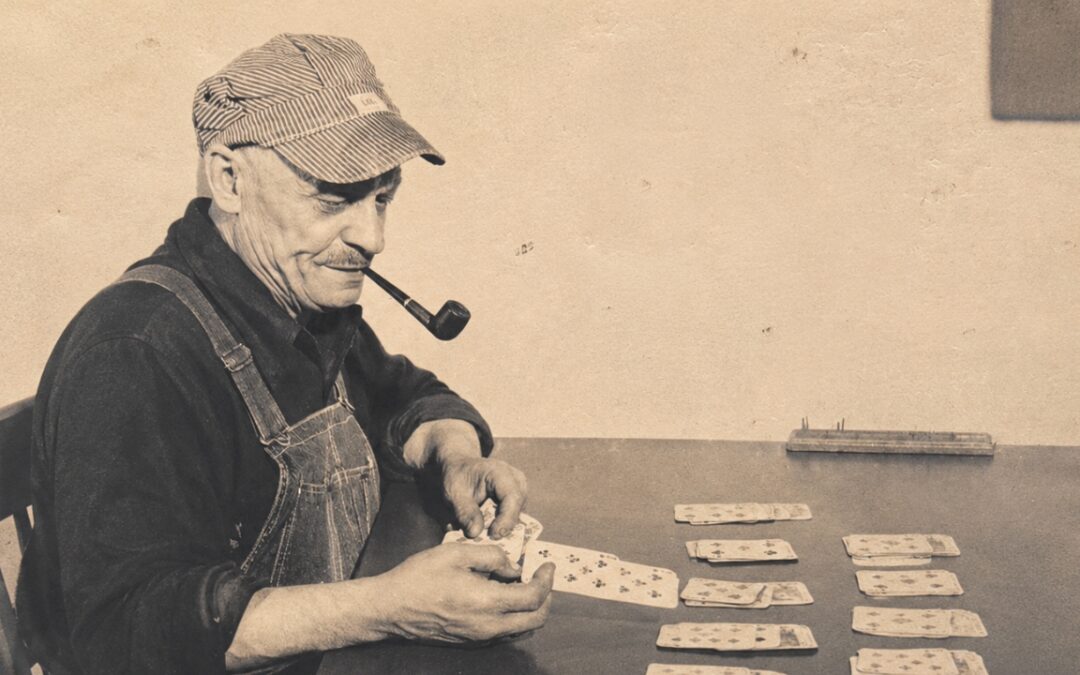
Misty Buterbaugh, granddaughter of veteran lightkeeper Louis I. Wilks, will visit Stannard Rock Lighthouse this summer to tour the remote beacon her grandfather maintained for 20 years.
Kimar’s Charters will make the journey possible, covering more than 100 miles round-trip to reach what is often called “the loneliest place in North America.”
The August trip will be Buterbaugh’s first time setting foot on “the rock.”
“The first time I went out there, it was kind of an eerie feeling because you’re so far out there,” charter Capt. Justin Wangerman said. “On a really clear day, you can see the Huron Mountains in the distance and the tip of the Keweenaw [Peninsula], but on an average day, you don’t. … You get that serene feeling along with that; the architecture of the lighthouse in the backdrop, and then some of the most beautiful sunrises. A lot of times you’ll see the sun way up high above you, and you’ll see big rainbow rings around it.”
Suspended between sky and sea, Stannard Rock is the most remote lighthouse in the United States, standing 24 miles off the nearest land at Keweenaw Point. Built in 1882, the light stands above a shoal that the U.S. Lighthouse Service viewed as “the most serious danger to navigation in Lake Superior” because of its low profile and location just off the Sault-Duluth shipping lane.
Fourteen head keepers served at the station between 1882 and its automation by the U.S. Coast Guard in 1961. Most served less than a decade. Wilks and his first assistant, Elmer Sormunen, stayed for two.
Wilks was one of the lake’s great lighthouse men. After coming home from World War I, he joined the Lighthouse Service and took an assignment as first assistant at Sand Hills Lighthouse near Eagle River. He transferred to the Keweenaw Waterway Lower Entrance light the same year, then, in 1924, took his first in a succession of posts between the Upper Peninsula and Apostle Islands, including Outer Island, Eagle Harbor, Raspberry Island and the shore-based Big Bay Point Lighthouse in 1933.
By then a husband and father, Wilks moved with his family to Big Bay.
The assignment held promise of a quiet, normal life spent on the mainland. Instead, Wilks was confronted with a rundown and isolated station, and a string of tragedies that would shape the rest of his life.
The hardest was the sudden death of his son Bobby in 1935.
“I believe that when he took the position at Stannard Rock, his son had passed away just a year prior to that — maybe not even a year, and I really think that that was one of his main reasons for taking the position,” Buterbaugh said. “I believe it gave him time to come to terms with his son’s death, because I think it gave him time alone to think and to be at peace with it.”
Wilks began his tenure as Stannard Rock’s head keeper in April 1936. His family moved to a house in Marquette.
There, he quickly acclimated to life at one of the harshest locations in North America. Where most spent only weeks at time, Wilks once spent 99 days. The light’s quirks and rhythms became his own — the rock, a part of his identity.
Alongside first assistant (and later head keeper) Sormunen and a rotating cast of assistants, Wilks spent the last 20 years of his 38-year lighthouse career at the rock. He retired in 1956.
Now, 70 years later, Buterbaugh plans to visit the place Wilks spent so much of his life.
“It blows my mind that it’s out there in the middle of the lake, and that it’s a place that you can actually go to,” she said. “Last year, when my mom passed away, I decided that it was my goal that I wanted to go to Stannard Rock. And so I started looking on Facebook. I said, ‘Does anybody have a boat?’”
Her search led to Kimar’s Charters, a family-owned resort and lake trout charter that’s been running fishermen to the waters off Stannard Rock since 1978.
“She told me the story about her grandfather,” said owner Sarah Kimar, who inherited the company from her father, Dave, in 2023. “She’d never even met him. But you could tell the impact he had on her life, and it just reminded me so much of my dad. And I said, ‘Well, we’ve got to get you there.’”
Kimar said the plan is for an Aug. 5 run to the rock aboard the company’s 27-foot Alaskan-style charter vessel. Wangerman will be at the helm. With permission from the rock’s stewards at the Superior Watershed Partnership, Buterbaugh, her sister and two of her children will scale a narrow ladder up to the lighthouse, then step inside the tower so central to their family’s story.
“I’m so excited,” Buterbaugh said. “It makes me want to cry right now, and it just gives me chills. To experience — in a way — what he did, I think it’s just going to bring closure, and it’s going to be a very personal and heartwarming experience.”