‘Green and Gold’ Sprouts from U.P. Roots to Indie Success
Upper Peninsula filmmakers Anders and Davin Lindwall turned their Iron River roots into “Green and Gold,” an independent feature starring Craig T. Nelson. Discover how family, mentorship, creative collaboration and community support helped bring the film from rural Wisconsin to theaters and streaming platforms nationwide.
Dreaming of making films is one thing. Actually doing it is another. There are many obstacles to overcome: locking down a story, securing financial backing, casting the right talent, crewing up with professionals and executing filming, editing, sound mixing and color grading.
Then comes the gauntlet of distribution. A theatrical release remains elusive, and for filmmakers in rural America, the bar for “hard” is raised exponentially. They must import everything — crew, cast, gear, housing, catering — and still make a film that looks like it came from a multi-million-dollar studio. Accomplishing this on an independent budget is nearly impossible.
Impossible, however, is what Upper Peninsula natives Anders and Davin Lindwall have accomplished with their first feature film, “Green and Gold.”
The Lindwall brothers grew up in Iron River, far removed from Hollywood’s hustle. In the quiet wilderness, shaped by small-town values and their grandfather’s dairy farm, their storytelling roots took hold.
Anders, the director, always had a camera in hand, while Davin, the producer, honed his organizational instincts through early filmmaking projects. Together, they believed in turning dreams into reality.
They credit their creative drive to mentors like Lee Rometti, a retired film teacher who introduced them to film competitions through Business Professionals of America. The brothers thrived, taking their high school films to national competitions.
Anders and Davin’s filmmaking journey grew naturally from their small-town upbringing in Iron River and their complementary personalities, despite a six-year age gap. Raised by Ed and Sylvia Lindwall in a household grounded in faith, hard work and service, they were part of a large family where being “of use” was expected — and modeled through their parents’ deep community involvement. That ethic shaped both brothers and their sisters, Erika and Krista, and continues to guide their work today.
Anders started making high school ski videos and dreamed of being a professional skier. When West Iron County High School didn’t offer a film class, he created an independent study with Rometti. “We were learning from scratch,” Rometti said. With help from an intermediate school district grant that provided cameras and Final Cut Pro software, Anders began editing and producing short films that gained attention. Rometti encouraged him to enter competitions, helping him qualify for nationals through BPA.
“Mr. Rometti helped me get into college, helped me apply for scholarships. I went to Azusa Pacific University in Los Angeles,” Anders said. “He didn’t pretend to be an expert — he just said yes and figured it out with us. That kind of support, especially in a small town, means everything.”
Davin echoed that sentiment: “Mr. Rometti didn’t have to do any of it. He wasn’t a film guy, but he saw something in Anders — and eventually in me — and just kept encouraging us.”
At university, Anders studied narrative film. There, he found that hard work and authenticity could go just as far as connections. After graduation, he worked in a cherry factory in Northern California, carving out a path through university gigs and nonprofit videos. “I convinced my university to hire me for a few commercials,” he said.
Davin followed a different route. Though he initially attended college, he leaned into the self-taught, hustle-heavy side of filmmaking. Immersing himself in the L.A. production world, he built his career through sheer persistence and strategic thinking, often described as “lawyerlike” in his objectivity and deal-making instincts.
The Lindwall brothers’ foundation was forged in Bible study, business club and community activities focused on service. Their cultural and spiritual grounding made their partnership seamless. Anders described their working relationship as one of deep trust and “secret language” shorthand. “I know exactly what he needs,” Davin said. “I know exactly what he’s thinking.”
Alex Ralston, a close friend and fellow Iron River native, recalled how faith played a foundational role in his connection with the Lindwalls — though he was part of the next wave. “I’m about nine years younger than Anders and a few years younger than Davin,” he said. “My older brother was in the same grade as Davin, so I kind of came in behind them.”
Ralston entered the circle through church. “When you get into high school, all the high schoolers are together in the same youth group,” he said. “That same year, Anders came back to Iron River and helped our youth group as one of our leaders. It was really cool to spend time with him on more of a spiritual hangout level. We were church friends, camp friends — and then we realized we all had this creative spark. We’d come up with ideas and build them out together.”
That spirit of collaboration evolved into Childe — a global production company with roots in Southern California and Colorado. While Childe runs commercial campaigns worldwide, its foundation is grounded in the values the brothers grew up with — integrity, storytelling and a connection to place. A decade later, the once-aspiring filmmakers have grown into husbands, fathers and business owners — juggling family life and creative ambition with the same humility that shaped their beginnings.
Their transition into filmmaking was never about chasing Hollywood dreams. It was about honoring the stories, values and people of the Upper Peninsula — something they’ve done masterfully with “Green and Gold.”
That small-town grit stayed with them, and when they set out to make their first feature, they didn’t wait for permission. They developed the story, turned down a studio offer in order to preserve creative control and launched into preproduction. But like many independent projects, the pandemic brought everything to a standstill. Originally slated to shoot before COVID-19, the film had to be pushed back and restructured.
“Green and Gold” draws directly from the Lindwalls’ background, capturing the quiet struggles and emotional complexity of rural life. Set on Midwestern farmland, the story follows Jenny, a young woman torn between family obligation and personal ambition. Madison Lawlor (“Juniper”) plays the role with grit and vulnerability. Craig T. Nelson (“Parenthood,” “Coach”) signed on early, bringing depth that anchors the film’s emotional core. He’s joined by Brandon Sklenar (“It Ends With Us,” “1923”), Annabel Armour (“Contagion”) and the late M. Emmet Walsh, who gives a moving final performance. Featuring music by Jackson Browne and S. Carey, the film steers clear of nostalgia and instead offers a clear-eyed look at the steadfastness embedded in rural communities.
Lawlor praised her experience working with the Lindwalls on “Green and Gold,” calling it emotionally grounded and fulfilling. “They’re incredible,” she said. “They’re just such good people.” She noted their deep respect for the people and places featured in the film. “They have so much respect for Wisconsin, where we filmed — for the real farms and the people we filmed with.”
One of the most powerful scenes — a quiet exchange in the barn between Jenny and her grandfather Buck — evolved just days before shooting when Nelson called to say he had rewritten the moment. “He called us the day before and was like, ‘Guys, I rewrote this. … I think it’s right,’” Davin said.
Anders added, “He could have easily just said, ‘Hey man, I’m going to write this,’ but instead he called and asked gently if I’d been thinking about changing it. And he made it better.”
Nelson said the change came from a place of emotional truth. “By the time we got to that scene in the barn, Buck had been through a lot,” Nelson said in an interview in late March. “There’s a moment earlier where he tries to talk to God in the field, and he’s unable to really express himself … . I remember telling Anders, ‘I’m not sure he knows how to pray.’ The words shouldn’t come easily. He’s stuck. We shot that scene a few different ways until we found one that worked. He finally found a small voice inside himself — a way to release some of what he’d been holding in. In the barn, he’s losing the one person he’s been able to relate to other than animals — his granddaughter. When I read that scene, I felt there was a deeper level he could reach. So I sat down one day, played with it and the words just came. I called Anders and read it to him. He responded positively, and we tried it on set. It worked. It felt true to Buck.”
Lawlor connected deeply with her role as Jenny, drawing on her upbringing to shape the performance. “I grew up in South Dakota, surrounded by strong, stubborn women — so I understood Jenny,” she said. That perspective helped her tap into the emotional weight of a character torn between personal ambition and inherited responsibility. “There was this quiet strength I really wanted to bring to her,” Lawlor said. “She’s not loud about her struggle, but it’s always there.”
That quiet struggle resonated just as deeply with Nelson, who portrayed Jenny’s grandfather, a man shaped by generational hardship and emotional restraint.
“You start to realize the legacy your ancestors gave you — the values they instilled and the work ethic they lived by,” he said. “Farming is a hard life. It takes resiliency and a belief system, and I think the film really brought that out.”
Nelson said stepping into the role of Buck came naturally, especially as a father, grandfather and great-grandfather himself. “When you’re the patriarch, there’s responsibility and accountability that comes with that,” he said. “The challenge is in trying to connect across generations — especially when you’ve lived through loss. Buck carries the guilt of losing a daughter, and it’s created a barrier between him and the people he loves.”
But indie filmmaking isn’t just about casting — it’s about execution. Determined to make their film look like it cost millions, the Lindwalls brought on cinematographer Russ Fraser, known for his work on Billie Eilish and Olivia Rodrigo music videos.
“Green and Gold” marked Fraser’s first feature, and he approached it with both ambition and resourcefulness. He spent two weeks in Door County, Wisconsin — a few hours southeast of Iron River — developing a visual language rooted in nostalgia and naturalism.
“I knew what I wanted it to look like,” Fraser said. “After reading the script and spending some time with Anders, I really knew. … I wanted to create something I would be proud of in 20 years.”
To pull it off, Fraser leaned on his relationship with Panavision. “I came to them with nothing and was like, ‘Hey, this is my first feature endeavor.’ They listened.” The team shot on ARRI Alexa Minis paired with a full set of Primo Anamorphic lenses and one prized 40mm C-Series lens — the same kind used on “Star Wars” — shipped from London. “We probably shot half the movie on that one lens,” he said.
The physical demands of the shoot were intense. “We were in the mud … on dairy farms … October … wind … cold,” Fraser said. A compact camera form factor and custom lookup tables — LUTs — helped him adapt, blending handheld shots for rawness with hard-mounted setups for balance and weight.
Still, early in the shoot, it was clear that a second camera would be essential to capturing the film’s visual scope — something the budget didn’t allow for. That’s when Nelson stepped in.
Anders Lindwall recalled, “On Day 2, Craig was like, ‘Hey, Anders, come here. Where’s your other camera?’ I told him we only had one. He just looked at me and said, ‘This is gonna be hard, isn’t it?’ Then he said, ‘Take whatever you need. Go get yourself a second camera. Have your producers talk to my people, and we’ll figure it out.’”
Fraser confirmed the support: “Yeah, he paid for the additional rental.”
For Nelson, the decision was simple. “I loved the story and what they were trying to do and what they had envisioned,” he said. “I had the means, and when there was a need, it just felt like the right thing to do. You have too much to do, and you want to be able to have options. If you only have one camera, you’re stuck. You can’t always capture what you need, especially with a story where the environment itself is a character. The land, the setting — that’s the stage. You need the scope to tell the story properly, and, thank God, I did have the ability to do something about that and help.”
The cinematic polish continued into post-production. Colorist Matt Osborne, who works with Company 3, handled the final grade. Osborne — originally from England but now based in Los Angeles — brought over 15 years of experience to the project and a long-standing creative relationship with Fraser. “We grew up together doing music videos and commercials,” Osborne said. “I always told him, when the time came, I’d love to do his first movie.”
Working in DaVinci Resolve, Osborne built on the LUTs Fraser had used on set and focused on enhancing what was already in the image. “Russ is very good at shooting beautiful skin tones,” Osborne said. “I always try to complement their images — not manipulate them into something they don’t want to be.”
The collaboration was rooted in mutual trust and a shared aesthetic. Fraser brought a textured, handheld style balanced with hard-mounted and stabilized setups. Osborne added scanned 35mm film grain, halation techniques and subtle golden tones — elements that gave “Green and Gold” its warm, organic look. “We wanted a look that was warm and inviting,” Osborne said, “with subtle golden tones, kind of a nod to the Green Bay Packers.”
Another key element in post-production was the extensive use of visual effects. VFX supervisor Matthew Gardocki and his Oklahoma City-based team delivered 128 shots — an exceptional number for an indie film. Most of the work was invisible by design: digital screen replacements, environmental enhancements and period-authentic branding.
“We had to make sure it all felt real,” Gardocki said. One memorable sequence involved digitally adding snow to a field where a car breaks down. “It was supposed to be winter, but there was no snow. So we painted it in. Then we digitally added a bird landing on the car. That was all us.”
Gardocki’s studio used Adobe After Effects, Blackmagic Fusion and Blender for compositing and environmental effects. Screen replacements on CRT televisions were done using Mocha’s planar tracking system. “We wanted everything to feel grounded and authentic,” he said. “We never wanted the effects to stand out.” The VFX team also created new branding assets after the production wrapped, when Culver’s joined as a sponsor. A Culver’s burger box bouncing on a dashboard was added entirely in post.
While the film’s visual effects were subtle and seamless, its soundscape was just as thoughtfully constructed. Like much of the production, the music came together without traditional industry infrastructure: no music supervisor, no high-powered licensing team, just hustle, heart and a little Midwest hospitality.
One of the film’s biggest musical “gets” came through an unexpected relationship. “We reached out to Jackson Browne because he had a Door County connection,” Anders Lindwall said. “He ended up taking a call from Davin, and they just hit it off — chatting about surfing and life. He gave us permission to use his music, no strings attached. It was all built on kindness and knocking on doors.”
The result is a soundtrack that blends effortlessly with the story’s emotional undercurrents.
Nelson praised the film’s subtle score by composer Corey Martin, noting how it crept in almost unnoticed. “I thought the music in the film was extraordinary,” he said. “I didn’t even realize I was listening to a soundtrack until halfway through. I was really captivated by the subtlety of it. I’m not just talking about the featured songs, but underneath the film there is this quiet, quite extraordinary score. When I realized what I was listening to, I thought, ‘My gosh, it’s so important to have that. It’s such a wonder.’ That’s one of the beauties of this little movie.”
All of this was done on an independent budget — a shoestring by Hollywood standards.
The turning point for “Green and Gold” came when two major Midwest institutions stepped in — with critical brand support that elevated the film’s visibility.
Justin Wolf, director of corporate partnership sales and activations for the Green Bay Packers, saw early materials and recognized how closely the film matched the team’s values. “We know a large contingent of our fan base is represented through folks who are on family farms,” Wolf said. “It felt close to our DNA.” While the Packers didn’t contribute financially, they offered in-kind marketing support that amplified the film through their channels.
Around the same time, Anders Lindwall connected with Alison Demmer, public relations manager for Culver’s, who recognized that “Green and Gold” aligned perfectly with the company’s values. “We saw a lot of the connections within the movie ring true to what Culver’s believes in — support of agriculture and the values of community,” Demmer said. “That’s why we wanted to be a part of it.”
Through Culver’s Thank You Farmers Project, the company provided valuable branding integration and a much-needed infusion to support marketing collaboration that significantly boosted awareness and reach for the film. “We put a lot of time into supporting the National FFA Organization,” said Demmer, referring to a group previously known as Future Farmers of America. “We want people to know where their food comes from and why agriculture matters.” With the support of Culver’s, alongside the Packers, “Green and Gold” was able to break through the indie noise and reach audiences across the region.
Once completed, “Green and Gold” faced the uphill climb of distribution. Released through Fathom Events, the film opened in nearly 1,000 theaters for a limited one-week run. Afterward, that number was reduced to about 200 theaters across select markets, including parts of the Midwest, Florida, Arizona and Colorado.
In most areas, the film was expected to fade quickly. But in the Thomas Theatre Group’s Upper Midwest circuit — located in the Upper Peninsula — something unexpected happened: The community showed up.
The film significantly outperformed expectations, running for about six weeks in Thomas venues. In Florida, many U.P. snowbirds rallied behind the film as well, helping extend its momentum beyond the region.
Fueled by grassroots social media campaigns and word of mouth, “Green and Gold” became the Thomas Theatre Group’s No. 1 film, an extraordinary achievement for a small-town indie drama competing against Hollywood blockbusters.
“We promoted it on Facebook and Instagram, but really it was word of mouth,” said Jeff O’Neill, general manager of Thomas’ Marquette venue. “Seniors especially came out in full force. We even sold out an 85-seat house.” This groundswell extended the theatrical run and helped build momentum for its upcoming digital release.
One compelling story from the production belongs to Ryan Piwarski, who interned with the Lindwalls as a teenager. As a student in Rometti’s film class, Piwarski shadowed Anders Lindwall throughout the shoot — not as a production assistant but as an authentic observer. He filmed behind-the-scenes footage and learned to manage a set with emotional intelligence and focus. “I was only 16 or 17, and I was treated like an equal,” Piwarski said. “I was shy at first, but one of Anders’ friends pulled me aside and gave me the confidence to step up. That changed everything.”
Piwarski’s experience is one thread in a broader pattern of mentorship and hometown investment. The Lindwall brothers stay connected to their roots in meaningful ways. Anders has returned to speak with Rometti’s students, sharing his journey and reinforcing the message that small-town origins don’t limit big dreams.
Now 21, Piwarski runs his own film company in Atlanta and is in talks to collaborate again with the Lindwalls. “If there’s a class like Mr. Rometti’s out there, take it,” he said. “I wouldn’t be where I am now without that experience.” For him — and many others who crossed paths with the Lindwalls — “Green and Gold” wasn’t just a movie set. It was proof that where you’re from doesn’t define where you can go, especially when those ahead of you take the time to reach back.
Another example of small-town support comes from Anders and Davin’s sisters — Erika Sauter and Krista Chako. Erika organized the church choir scene in the film. She rallied volunteers from their community, many of whom drove four hours one way to participate. The group spent the day waiting in a church basement, singing for just 30 minutes before making the long trek back home. And Krista not only provided emotional support but also babysitting services for her brothers, proving that sometimes all you need is a sibling to hold down the fort while you chase your dreams.
From a thousand-theater opening to a regionally extended run driven by word of mouth, the film proved that you don’t need millions to make something that connects.
Now, “Green and Gold” is heading to streaming. Beginning April 1, audiences nationwide will be able to watch the film on major platforms including Apple TV, Amazon Prime Video, Google Play and Fandango at Home.
What’s next for the Lindwalls? In addition to their commercial work, they’re already developing their next feature project, rooted once again in the cultural and emotional landscapes of the Midwest.
Their “Green and Gold” debut has proven one thing: “Impossible” doesn’t apply when you combine vision, talent and a community that believes in you.
This feature originally appeared in the April 2025 issue of Marquette Monthly. An abridged version was also published in The Munising Beacon.
Author

Related Articles
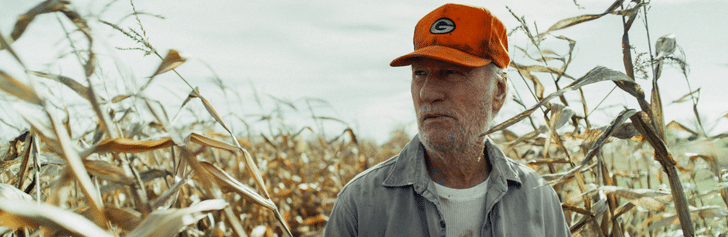
Craig T. Nelson on legacy, loss and the quiet power of ‘Green and Gold’
Emmy-winning actor Craig T. Nelson reflects on legacy, family and loss in “Green and Gold,” an independent film by Upper Peninsula filmmakers Anders and Davin Lindwall. Nelson shares how he shaped his character, helped support the production and reunited with longtime friend M. Emmet Walsh.