Bergman, Barr, Featherly outline priorities in 1st Congressional District race
U.S. Rep. Jack Bergman and challengers Callie Barr and Zebulon Featherly outline their priorities for Michigan’s 1st Congressional District, addressing affordability, rural health care, jobs, infrastructure and economic development.
Voters in Michigan’s 1st Congressional District will decide Tuesday whether to retain Republican U.S. Rep. Jack Bergman or elect one of six challengers, with affordability, economic development, rural health care and infrastructure among the issues facing Northern Michigan and the Upper Peninsula.
Republican incumbent U.S. Rep. Jack Bergman, Democratic challenger Callie Barr and independent candidate Zebulon Featherly were each asked the same five questions, covering their backgrounds, year-round economic development, affordability, rural services and priorities for the next congressional term.
The district encompasses all 15 counties of the Upper Peninsula and 20 counties in the northern Lower Peninsula.
Bergman, a retired Marine Corps lieutenant general, served 40 years in the military before entering politics. He also worked as a commercial airline pilot and small-business owner. First elected to Congress in 2016, Bergman said his military and private-sector experience shaped his approach to public service.
“This job has never been about a title,” Bergman said. “It’s about service, and I’m honored to continue serving the communities we call home.”
Barr, an attorney, military spouse and veterans advocate, said her experiences helping her husband obtain medical care following deployments to Iraq and Afghanistan motivated her to pursue a legal career and public office.
She said she has helped veterans file disability claims without charging for her services and wants to expand access to benefits, affordable housing and health care.
Featherly, who grew up in Houghton and now lives in Traverse City, previously worked as a wind turbine technician before becoming an apprentice electrician. He said dissatisfaction with the choices available to voters motivated him to run as an independent.
All three candidates identified the need to strengthen economic opportunities beyond the region’s seasonal tourism industry, although their approaches differ.
Bergman favors reducing federal regulations, maintaining competitive tax policies, expanding broadband and supporting workforce development. He also identified manufacturing, forestry and skilled trades as industries with potential to provide year-round employment.
“My goal is simple: make sure young people who grow up in places like Munising have the opportunity to build a career, raise a family and stay right here,” Bergman said.
Barr identified affordable workforce housing and access to local hospitals as essential to attracting and retaining employers. She supports using U.S. Department of Agriculture Rural Development programs to improve water, sewer and broadband infrastructure while encouraging growth in manufacturing, forest products and skilled trades.
“Munising’s natural beauty and tourism economy are a gift, but a good-paying job shouldn’t end when the visitors leave,” Barr said.
Featherly stressed the importance of attracting remote workers to Northern Michigan by expanding access to high-speed internet. He said additional residents working remotely could create demand for construction, restaurants and other local services, supporting employment in the skilled trades.
He also emphasized the importance of experienced tradespeople training younger workers as older generations retire.
Affordability emerged as another shared concern, with candidates offering different approaches to reducing household expenses.
Bergman cited his support for extending federal tax relief, reducing taxes on tips and overtime, expanding domestic energy production and reducing regulations that he argues increase utility costs. He also said he supports removing barriers to housing construction and improving access to rural housing financing.
Barr emphasized prescription drug prices, health insurance premiums and housing affordability. She supports protecting federal health insurance tax credits, expanding first-time homebuyer assistance and increasing access to housing programs for teachers, nurses and first responders.
“No one should have to choose between filling a prescription and putting dinner on the table,” Barr said.
Featherly identified trade policy and energy costs as major affordability concerns. He criticized tariffs affecting trade with Canada, arguing that reducing trade barriers could help lower costs for Michigan residents.
He also advocated greater investment in renewable energy, arguing that locally generated wind, solar and hydroelectric power could reduce dependence on fossil fuels.
Both Barr and Featherly criticized U.S. military involvement in Iran and its economic consequences. Barr also criticized Bergman’s support for tariffs, arguing that those policies have contributed to higher costs for fuel, food and building materials.
Bergman voted in February against a House resolution seeking to end the national emergency underlying tariffs on Canadian imports, effectively supporting their continuation. He also voted in June against a resolution directing the withdrawal of U.S. forces from unauthorized hostilities with Iran.
Rural health care, broadband access and aging infrastructure were featured prominently in the responses of the candidates.
Bergman identified protecting rural hospitals and community health centers as priorities. He was an original co-sponsor of the bipartisan Rural Hospital Revitalization Act of 2026, which would provide interest-free federal loans for eligible rural hospital construction and renovation projects.
He also introduced the Rural 340B Access Act of 2025, legislation that would expand eligibility for the federal 340B drug discount program to rural emergency hospitals.
Barr identified rural health care as her leading concern, criticizing Bergman’s support for federal legislation reducing projected Medicaid spending.
Bergman voted for H.R. 1 in 2025, a broad federal tax and spending law that included tax reductions, changes to federal health care programs and new Medicaid eligibility requirements. The legislation reduced projected federal Medicaid spending, with health care advocates warning that the changes could increase financial pressure on rural hospitals.
Barr supports protecting Medicaid funding, strengthening Medicare reimbursements for rural providers, reducing prescription drug costs and expanding loan forgiveness programs to attract medical professionals to underserved communities.
“When a rural hospital closes, there is no backup plan and families must drive hours for a birth or an emergency,” Barr said.
Featherly placed particular emphasis on housing, broadband and infrastructure improvements that would allow businesses to operate reliably in rural communities.
He identified dependable internet access and electricity as essential to attracting employers, supporting electronic transactions and making remote employment practical.
“Infrastructure and housing would be my first picks for priorities on a local level,” Featherly said.
Looking ahead, Bergman identified rural economic development, veterans services, health care, domestic energy production and preservation of the Great Lakes and outdoor resources as priorities for another term. He also noted that helping constituents navigate federal agencies and reducing what he considers unnecessary federal burdens.
Barr said she would prioritize lowering household costs, protecting Social Security, preserving rural health care funding and improving government transparency. She also proposed legislation addressing corruption and said her congressional staff would be accessible throughout the district.
Featherly identified reducing corporate influence in elections as his leading congressional priority. He argued that political spending by corporations and outside interests can interfere with the ability of elected officials to represent their constituents.
“My top priority is, if I’m elected, to get corporate money out of politics,” Featherly said.
He also expressed opposition to the proposed Copperwood Mine and Enbridge Line 5, arguing that government decisions should reflect public interests rather than corporate influence.
The candidates outlined differing approaches to economic development, affordability, rural services and representation, offering voters distinct priorities for the next congressional term.
Also appearing on the Nov. 3 ballot are Libertarian Arnett Satterla, Green Party candidate LaVeta Davenport, U.S. Taxpayers Party candidate Doc Kovaly and Working Class Party candidate Liz Hakola.
Author
Related Articles
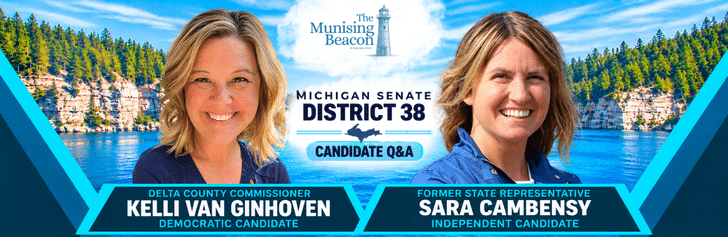
Van Ginhoven, Cambensy outline priorities in District 38 Senate race
Michigan Senate District 38 candidates Kelli van Ginhoven and Sara Cambensy outline their priorities for the Upper Peninsula, including affordability, rural health care, housing, jobs and economic development.
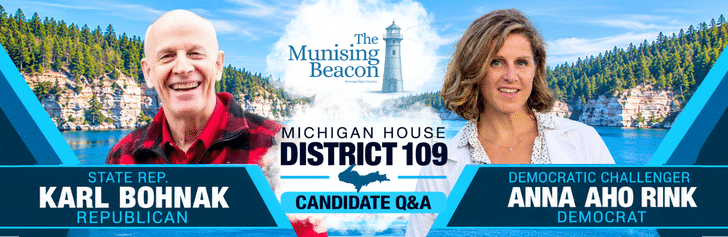
Bohnak, Aho Rink outline priorities in District 109 House race
Republican incumbent Karl Bohnak and Democratic challenger Anna Aho Rink outline their priorities for Michigan’s 109th House District, including affordability, rural health care, energy, infrastructure and economic development.
Benson, Brinks outline plans for rural Michigan, U.P. economy
Michigan gubernatorial candidate Jocelyn Benson and running mate Winnie Brinks discuss their plans for the Upper Peninsula, focusing on affordability, rural health care, education and year-round economic opportunities.