Van Ginhoven, Cambensy outline priorities in District 38 Senate race
Michigan Senate District 38 candidates Kelli van Ginhoven and Sara Cambensy outline their priorities for the Upper Peninsula, including affordability, rural health care, housing, jobs and economic development.
Three candidates are seeking Michigan’s 38th Senate District seat in the Nov. 3 election, with Democrat Kelli van Ginhoven and independent Sara Cambensy offering different approaches to economic development, affordability and public services across the Upper Peninsula.
Republican David Prestin is also on the ballot. The Munising Beacon contacted Prestin’s campaign and offered him the opportunity to answer the same questions presented to the other candidates. As of publication, his campaign had not responded. Should responses be received, The Beacon will update the article and publish the additional information on its website.
Van Ginhoven, a Delta County commissioner and former small-business owner, previously chaired the Delta County Democratic Party and served on the Escanaba Planning Commission and Downtown Development Authority. Her campaign focuses on rural and mental health care, schools, housing and wages.
Cambensy, a former state representative who served three terms in the Michigan House as a Democrat, began her public service career on a planning commission before serving in city government. She is seeking a return to Lansing as an independent.
“I just wanted to be free to vote in the best interest of the people,” Cambensy said, explaining her decision to run as an independent.
Her candidacy faced a challenge to qualifying petitions filed by Marquette resident Linda Donckers in July. Cambensy disputed the allegations and attributed opposition partly to Democratic Party tensions. In a July 31 statement sent to Upper Peninsula news outlets, including The Munising Beacon, Marquette County Democratic Party Chair Jennifer Figler said the challenger was an individual Marquette County resident who was not a member of the Democratic Party. The Michigan Board of State Canvassers voted Aug. 17 to accept Cambensy’s petitions, allowing her to appear on the ballot.
Both candidates identified the need for jobs that allow young people to remain in the U.P., but proposed different paths.
Van Ginhoven wants to expand union-supported manufacturing tied to renewable energy, including electric vehicle charging equipment, solar panels, wind turbines and battery storage. She also called for training health care workers who can return to or remain in rural communities.
“We can be the leaders in green energy production if we have an advocate pushing for these businesses to locate in the U.P.,” she said.
Cambensy favors directing more state and federal resources toward local infrastructure projects and smaller businesses. She said investments in roads, water systems and other community needs could create skilled-trades jobs while reducing pressure for additional local taxes.
Cambensy also questioned the state’s reliance on economic incentives for large corporations. She claimed Michigan Economic Development Corp. investments have generated a 9% return since 2000, at a cost of nearly $600,000 per job. She advocated redirecting more resources toward grants for small businesses seeking to expand or operate beyond the tourism season.
On affordability, van Ginhoven supports phased increases in Michigan’s minimum wage. She also proposed allowing tourism-dependent communities to establish locally administered tourism or luxury taxes to help pay for infrastructure used by visitors.
Cambensy focused on housing costs and local government funding. She discussed state-local partnerships to rehabilitate or build housing, possible property tax abatements for development and rent-to-own models intended to keep housing accessible.
Health care and schools were prominent in both candidates’ responses.
Van Ginhoven favors community-owned health facilities, a Michigan-based public health insurance proposal known as MiCare and federal Medicare for All. She also called for a statewide school infrastructure fund and a teacher student-loan forgiveness program tied to service in Michigan schools.
Cambensy raised concerns about the costs rural school districts face, particularly transportation across large geographic areas. She also said state lawmakers should work to return more funding to local schools and municipalities and improve oversight of publicly funded construction projects.
For her first term, van Ginhoven identified rural and mental health care and wages for Michigan Department of Corrections employees as leading priorities. She proposed reviewing educational requirements for corrections jobs and pursuing funding for a U.P. mental health clinic.
Cambensy named affordability, local funding, housing and energy bills among her priorities. She said serving as an independent would allow her to build coalitions around individual proposals rather than follow a party agenda.
The candidates’ responses reflect different strategies for addressing challenges shared by U.P. communities: van Ginhoven emphasizing health care systems, worker wages and renewable-energy industries, and Cambensy emphasizing local investment, housing and flexibility in legislative negotiations.
Author
Related Articles
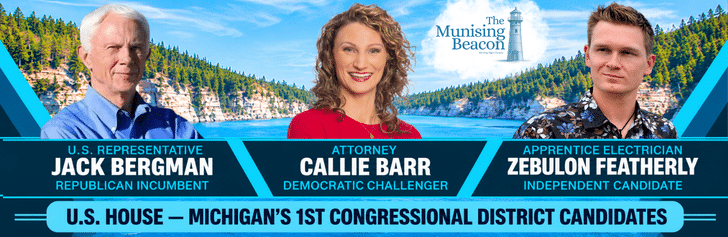
Bergman, Barr, Featherly outline priorities in 1st Congressional District race
U.S. Rep. Jack Bergman and challengers Callie Barr and Zebulon Featherly outline their priorities for Michigan’s 1st Congressional District, addressing affordability, rural health care, jobs, infrastructure and economic development.
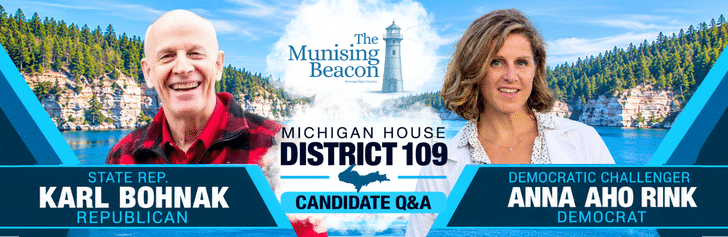
Bohnak, Aho Rink outline priorities in District 109 House race
Republican incumbent Karl Bohnak and Democratic challenger Anna Aho Rink outline their priorities for Michigan’s 109th House District, including affordability, rural health care, energy, infrastructure and economic development.
Benson, Brinks outline plans for rural Michigan, U.P. economy
Michigan gubernatorial candidate Jocelyn Benson and running mate Winnie Brinks discuss their plans for the Upper Peninsula, focusing on affordability, rural health care, education and year-round economic opportunities.