Voters to decide statewide proposals, Grand Island Township millage renewal
Michigan voters will decide two statewide ballot proposals Nov. 3 involving a constitutional convention and campaign finance restrictions. Grand Island Township voters will also consider renewing an operating millage through 2030.
Michigan voters will decide two statewide ballot proposals Nov. 3, addressing a possible rewrite of the state constitution and restrictions on political contributions. Grand Island Township voters will also consider renewing an operating millage that supports township services.
The three proposals carry different implications for state government, campaign finance and local property taxes.
Proposal 2026-1: Constitutional convention
Michigan voters will decide whether to convene a constitutional convention in 2027 to consider rewriting the state’s 1963 constitution.
The question appears automatically every 16 years under the Michigan Constitution. Voters rejected previous convention proposals in 1978, 1994 and 2010.
If approved, voters would elect 148 delegates, representing Michigan’s 110 House districts and 38 Senate districts. Delegates could examine provisions governing taxation, education, elections, individual rights and the structure of state government.
The convention would convene in Lansing in October 2027. Its proposed constitution would require a separate statewide vote before taking effect.
The convention would involve public expenditures for delegate elections, staffing, facilities and operations. The total cost would depend on the convention’s duration and expenses.
Supporters view a convention as an opportunity to modernize Michigan’s governing document. Opponents raise concerns about costs and the possibility of changing existing constitutional protections.
A “yes” vote authorizes the convention, not an immediate constitutional rewrite. A “no” vote leaves the current constitution in place without convening a convention.
Proposal 2026-2: Campaign finance restrictions
This initiated law would restrict political contributions from regulated electric and gas utilities, government contractors receiving more than $250,000 annually in government contracts and individuals or organizations with substantial connections to those entities.
The restrictions would apply to contributions benefiting candidates or officeholders whose positions affect those businesses.
Michigan already regulates political contributions and requires disclosure of certain campaign expenditures. The proposed law would expand those requirements to additional contributors and political communications.
The proposal would also extend disclosure requirements to communications identifying candidates or ballot questions, even when advertisements do not explicitly urge voters to support or oppose them.
Internet political communications would be expressly subject to requirements identifying who paid for them.
Supporters argue the changes would reduce potential conflicts of interest and increase transparency. Opponents question the restrictions on political participation and raise concerns about free speech.
A “yes” vote adopts the new restrictions and disclosure requirements. A “no” vote retains existing campaign finance law.
Grand Island Township: Operating millage renewal
Grand Island Township voters will consider renewing an existing property tax levy of up to 2 mills for four years, beginning in 2027 and continuing through 2030.
The millage was previously approved in 2022 and supports general township operating expenses.
One mill equals $1 for every $1,000 of taxable property value. At the proposed rate, a property with a taxable value of $100,000 would generate $200 annually in township operating taxes.
For comparison, a property with a taxable value of $50,000 would generate $100 annually, while a property with a taxable value of $150,000 would generate $300. These figures represent the total levy at the proposed rate, not an increase over the existing millage.
If approved and levied in full, the renewal is estimated to generate $13,104 during its first year, according to the township’s ballot language.
Because the proposal renews an existing millage at the same authorized rate, it does not request a higher millage rate.
A “yes” vote renews the operating levy through 2030. A “no” vote rejects the renewal, ending this particular authorization after its current term.
Author

Related Articles
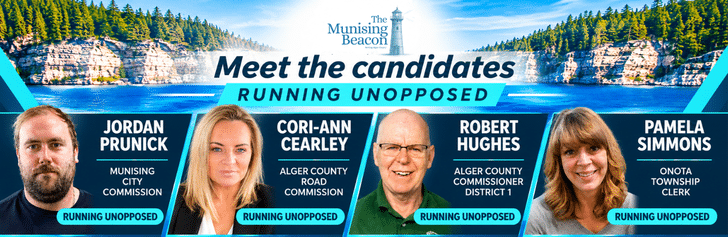
Unopposed, with three seats short
Fifteen Alger County candidates are running without listed opponents in the Nov. 3 election, while Superior Central and Au Train-Onota school districts have three board seats without candidates on the ballot.
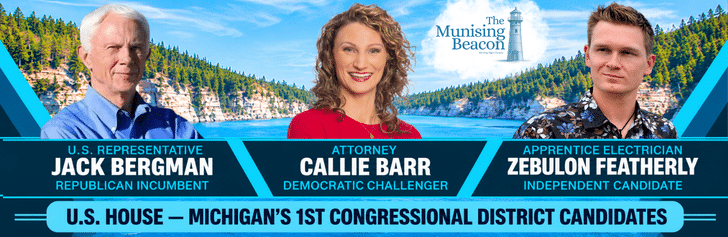
Bergman, Barr, Featherly outline priorities in 1st Congressional District race
U.S. Rep. Jack Bergman and challengers Callie Barr and Zebulon Featherly outline their priorities for Michigan’s 1st Congressional District, addressing affordability, rural health care, jobs, infrastructure and economic development.
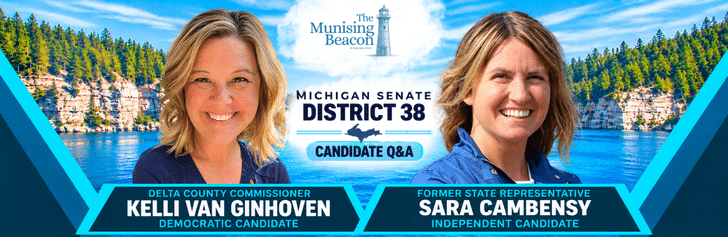
Van Ginhoven, Cambensy outline priorities in District 38 Senate race
Michigan Senate District 38 candidates Kelli van Ginhoven and Sara Cambensy outline their priorities for the Upper Peninsula, including affordability, rural health care, housing, jobs and economic development.